Imagine if we captured rainwater from every house in South East Queensland?
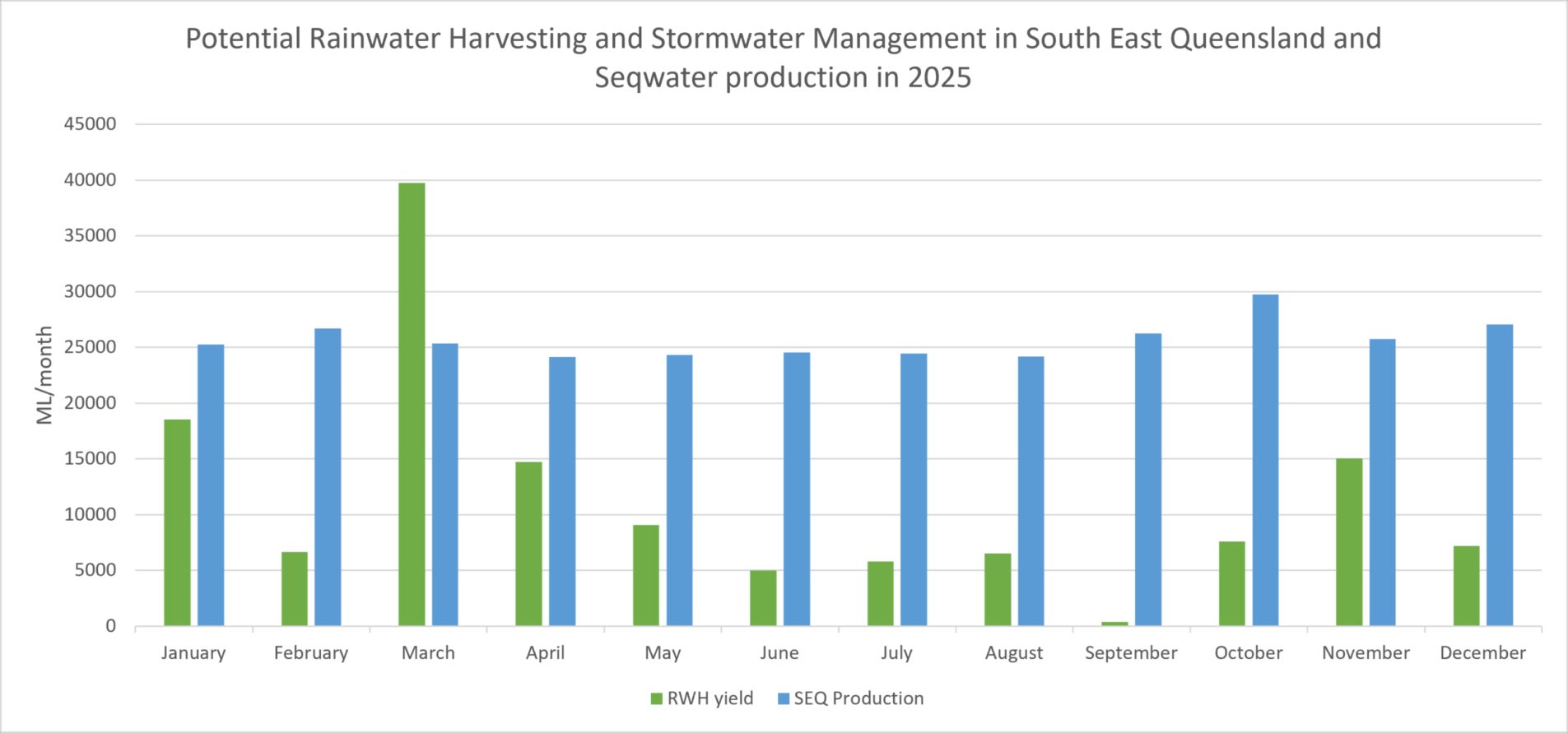
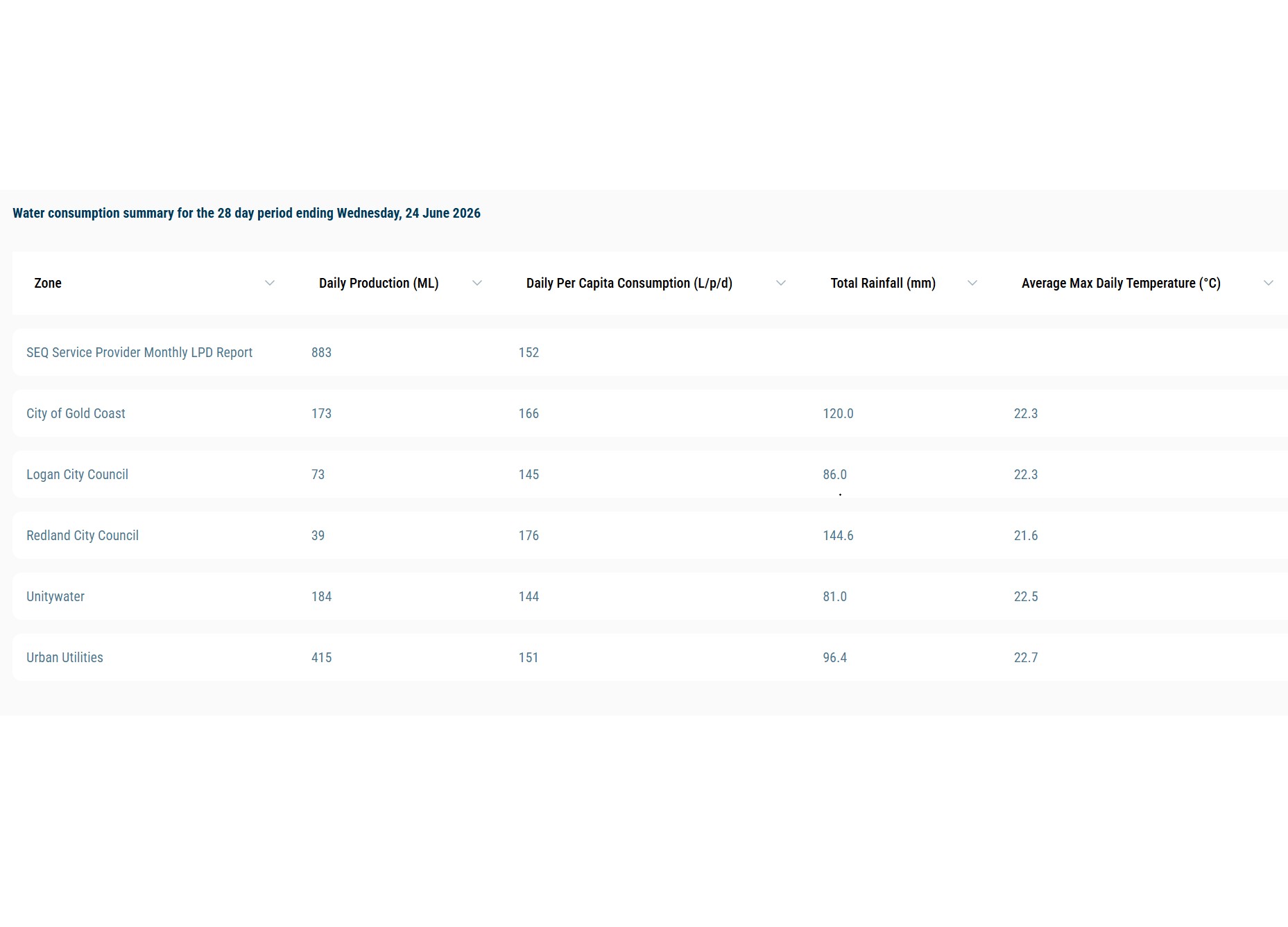
This article lists some assumptions I have made in order to make a transparent estimate of potential rainwater harvesting yield in South East Queensland, based on the monthly report from SEQ water on rainfall (average daily use tab) and their water production in the example below.
The appropriate standard for this assessment is a proper systems framework assessment by Peter Coombes but Peter is in very high demand. In the meantime this is an indicative assessment.
Seqwater Monthly data
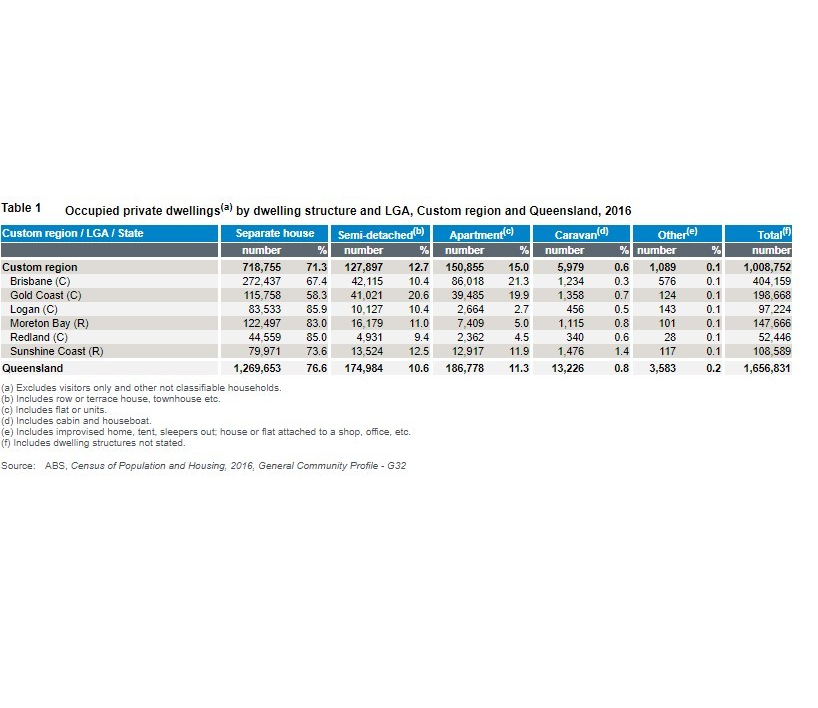
The Seqwater report lists rainfall over the last week for a number of areas. I have cross referenced these areas to local gov areas and regions based on the housing data from the Queensland Department of Housing and Public Works.
The cross references from the SEQ water table to the Department of Housing table are as follows
City of Gold Coast – Gold Coast Council
Logan City Council – Logan City Council
Redland City Council – Redland City Council
Unity Water – Moreton Bay region and Sunshine Coast region
Urban Utilities – Brisbane City Council
Rainwater volumes are reported on a 28 day basis by SEQ. This is slightly different to monthly reporting.
Housing Data
I have only counted separate dwellings, semi-detached dwellings and apartments.
I have assumed that a reasonable estimate of roof area is as follows.
· Separate dwellings 150sqm. This is the roof area recommended in the Rainwater Harvesting Residential Design specification from Rainwater Harvesting Australia and we have found it to be a practical guide.
· Semi-detached dwellings 75sqm, these tend to have a smaller footprint than separate dwellings
· Apartments 25sqm, shared roof space but also more opportunities for basement tanks that can capture the whole roof area.
Yield Assumptions - high rainfall events, non residential areas
SEQ can experience very high rainfall events . Depending on the size of the rainwater tank not all of this rain may be harvested and some will overflow, resulting in an unknown overestimate of yield. Despite this the spreadsheet assumes that all rainwater will be collected because the objective is to measure the potential yield.
The spreadsheet only records yield for residential dwellings. This means that all of the potential commercial and industrial rainwater harvesting is not being included, resulting in a significant underestimate of yield. For example our Kingspan factory in the Gold Coast has a roof area of 3000sqm and impervious area of 10000sqm.
Calculating Production
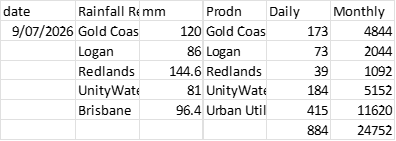
I have created a spreadsheet listing the numbers of different kinds of dwelling in each area and the different expected yields. The reference table shows rainfall figures taken from the SEQ water report. This is the spreadsheet for the 28 days ending 24th June 2026.
On the left hand side rainfall is recorded for each LGA. For example rainfall for Gold Coast was 120mm.
Production is also recorded for each relevant water utility. For example Gold Coast daily production was 173ML.
Calculating Roof Runoff
Based on roof area yield is calculated for separate dwellings, semi detached and apartments. For example in Gold Coast a separate dwelling is assumed to have a roof area of 150sqm. For 120mm of rain and 115758 dwellings this produces 2084ML.

Calculating yield and RWH%
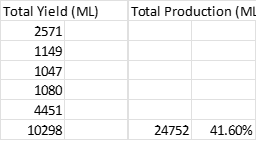
These figures are summed for three housing types and five LGAs to calculate total yield, in this case 10,298 ML. Total production is calculated as 24752 ML. Rainwater yield as a proportion of production is 41.6%