
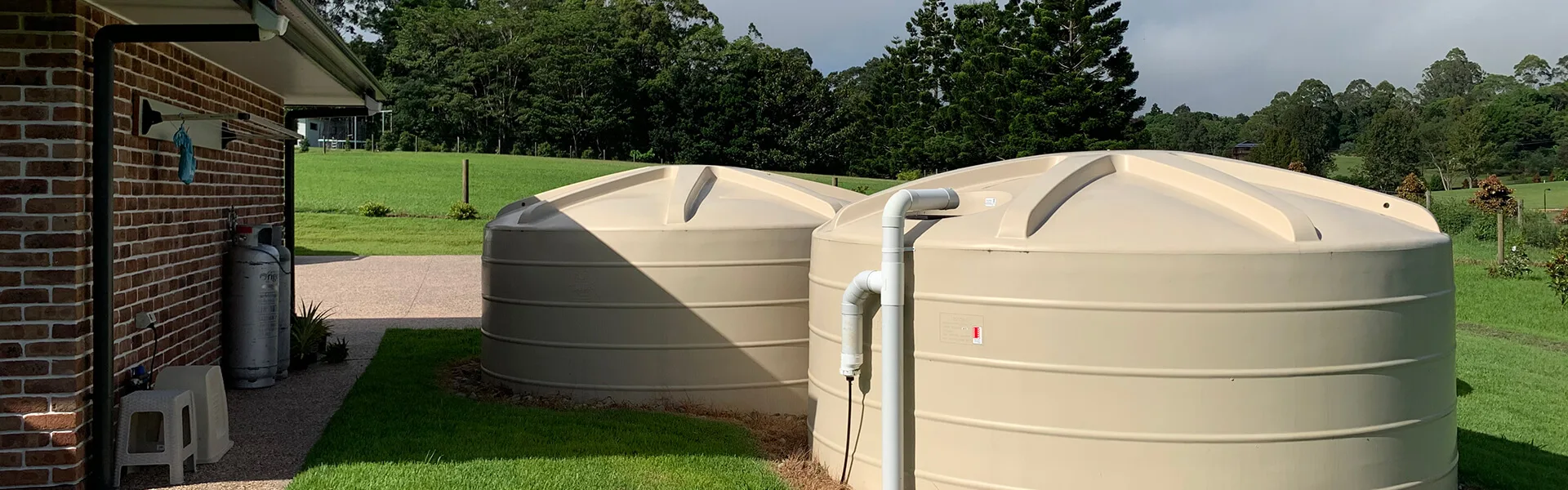
Our vision is to harvest rainwater to build sustainable and resilient communities.
The Rainwater Harvesting Association is a not-for-profit industry association of manufacturers and suppliers for rainwater harvesting. We are the peak body representing the rainwater harvesting industry. Our key role is to explain the resilience, water efficiency and stormwater management benefits of rainwater harvesting to this and future generations.
Rainwater harvesting is the only solution that delivers demand management, drought response, disaster resilience, flood management, stormwater pollutant and volume controls, and water for urban cooling and groundwater replenishment. Rainwater tanks are a popular, low-cost, easily sourced, locally made product.
Communities need nature-based solutions to build sustainable futures. Rainwater harvesting is an important element of land use planning policies and building controls at every level of government. The Rainwater Harvesting Association should be represented on working groups developing rainwater and stormwater related policies and regulation.
Rainwater harvesting for most buildings is a basic building block of resilient cities. In natural and other disasters, the rainwater tank is a local water source that cannot be hacked, works without electricity and keeps filling up again.
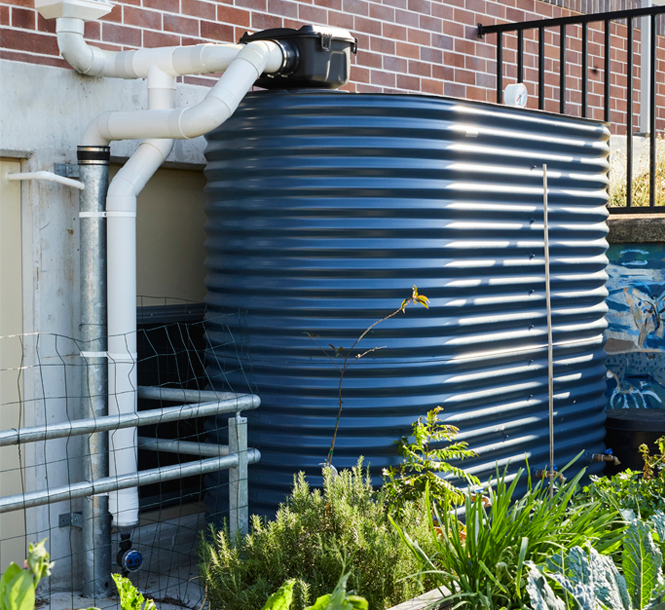
Rainwater Harvesting
Committee Members

Jackie Hammond
RHA Chair
CEO – Blue Mountain Co. (Rain Harvesting Pty Ltd)

Michael Smit
RHA Deputy Chair
Technical and Sustainability Manager – Kingspan Group
Anant Yuvarajah
RHA Secretary
Director – ASC Water Tanks

Michelle Kramer
RHA Treasurer
General Manager Sales and Finance – Q Tank

Stuart Heldon
Committee Member
Business Unit Director – Kingspan Group

David Beltrami
Committee Member
General Manager – Beltrami Group

Adam Batty
Committee Member
Account Manager QLD – White International

Luke Webb
Committee Member
National Key Account Manager OEM – Davey Water Products

Nick Westley
Committee Member
Sales Engineer OEM – Grundfos
Recognition
The RHA is fortunate to have had Professor Peter J Coombes as a former Patron and we wish him well. We have summarised the outstanding contribution Peter has made to the understanding of urban water management in Australia, but we are conscious Peter operates across a broad range of disciplines and networks, and this acknowledgement only covers part of his work.
Peter is an independent thinker whose contribution will continue to benefit the Australian and international water industry for generations to come. His lists of important publications and senior appointments speak for themselves.
Peter studied Engineering, Surveying, Land Use Planning, Hydrology, Water Services and Microbiology at the University of Newcastle, completing a PhD in 2002. He has since extended his academic qualifications to include a Bachelor of Economics and a Diploma of Legal Studies, reflecting the breadth of his thinking across technical, economic and regulatory dimensions of water management.
Peter’s outstanding contribution is using detailed, verified data to build a whole-of-system view of water management. This stands in contrast to the widespread reductionist, compartmentalised approach that has long shaped data collection, analysis and management systems in the water sector. Peter’s method requires data from a wide range of disciplines and scrupulous attention to detail — without modelling the whole system, the real costs and benefits of different solutions are impossible to identify.
Peter’s second contribution is a special study of decentralised water systems, particularly rainwater harvesting. This has provided key insight into the large infrastructure of centralised water distribution and treatment systems we currently rely on. Using a systems view, Peter identified that adding decentralised solutions to the centralised water industry delivers more efficient outcomes than relying on any single solution.
Peter’s third contribution is applying his analysis to the allocation of scarce resources, or economics. Using a systems view, Peter analyses the costs and benefits of the ‘business as usual’ scenario in comparison with long-term development options. Economics requires a holistic conceptual framework to inform any numerical analysis. Peter’s formal qualifications in economics and law deepen this contribution, allowing him to engage with investment economics, regulatory frameworks and policy design with equal rigour.
Peter’s fourth contribution has been to champion a deceptively simple concept: the microbiology of the humble rainwater tank. Peter has participated in numerous research papers showing that a rainwater harvesting system develops a living biosphere with an effective treatment train, helping to eliminate pathogens and neutralise heavy metals.