
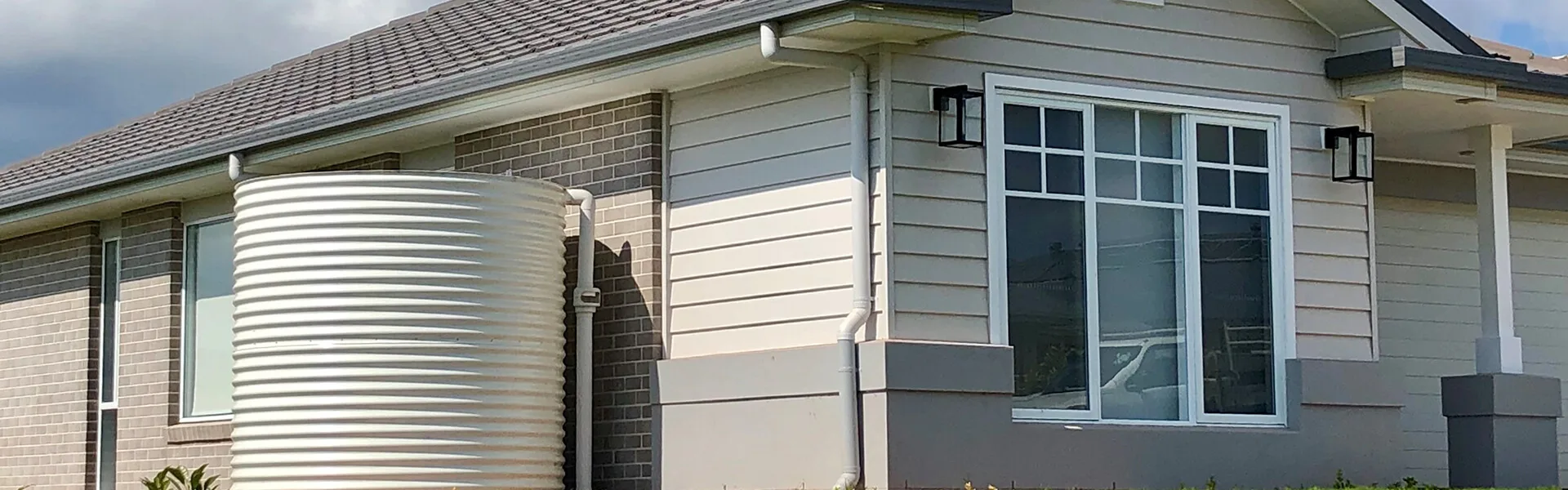
The Rainwater Harvesting Association has released the first national Rainwater Harvesting Policy. The policy calls on all levels of government to implement rainwater harvesting in urban areas through planning and building development controls — reducing the volume of stormwater and the demand for water at both the lot and city scales.
Why the policy matters now
A great deal has changed over the past decade. The rising costs and risks of stormwater management are substantial. The rising charges for utility water are well-documented and have significantly improved the cost-benefit ratio for a rainwater tank. We believe these costs will continue to rise, and the case for rainwater harvesting will only grow stronger.
One in four Australian houses has a rainwater tank, but after the Millennium Drought, some states removed them from their building codes. Rainwater harvesting is a low-cost, popular response to urban flooding, damage to waterways, and rising utility water costs.
A vast missed opportunity
Rainwater harvesting is a vast missed opportunity in our cities. The volume of rainwater falling on urban areas exceeds our annual utility water consumption — and it is delivered directly to our buildings. The rainwater we do not harvest instead becomes stormwater that overwhelms existing infrastructure, damages homes and natural waterways, and contributes to blue-green algae outbreaks.
What the policy calls for
The policy positions rainwater harvesting as the first step in managing urban water — and as the only management option that delivers simultaneous benefits for stormwater management and water conservation. With rainwater harvesting in place, we can reassess the need for new water and stormwater infrastructure in urban areas.
The policy also calls on government to support rainwater harvesting in the community through IoT monitoring, design advice, information about the benefits, and practical implementation support.
Supporting rural Australia
Rural Australia relies almost entirely on rainwater harvesting, including for drinking water. The policy emphasises the importance of avoiding unnecessary regulatory costs and barriers that could limit access to this essential water source.
Recognition
The Rainwater Harvesting Association is indebted to Professor Peter J Coombes for the systems thinking, strategic insight and technical analysis that underpin this policy.